

Co-teaching is an increasingly popular special
education service delivery model. It provides ALL
students with access to the general education
curriculum and high quality content instruction in
addition to the supports and adjustments they need
to succeed.
Co-teaching consists of a general educator and
special educator who work as a team to plan and
implement instruction. At its best, co-teaching
improves student performance and is mutually
beneficial for the teachers involved. Co-teaching
models include:
Team Teaching
One Teach-One Support
Parallel Teaching
Alternative Teaching
Station Teaching
How can you make your co-taught classroom a great
place for teaching and learning? Check out these
resources.
education service delivery model. It provides ALL
students with access to the general education
curriculum and high quality content instruction in
addition to the supports and adjustments they need
to succeed.
Co-teaching consists of a general educator and
special educator who work as a team to plan and
implement instruction. At its best, co-teaching
improves student performance and is mutually
beneficial for the teachers involved. Co-teaching
models include:
Team Teaching
One Teach-One Support
Parallel Teaching
Alternative Teaching
Station Teaching
How can you make your co-taught classroom a great
place for teaching and learning? Check out these
resources.
| The Hammond Inclusive Teaching Project |

| COLLEGE OF EDUCATION |

| School City of Hammond Special Education Department and Purdue University Calumet College of Education |
| DIFFERENTIATED INSTRUCTION |
| CO-TEACHING |
| IEP DEVELOPMENT |
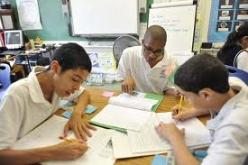



| Myths exist because they sound intuitively correct and support stereotypical thinking. The facts are clearly supported by educational research evidence. |

| INFORMATION, RESOURCES, AND SUPPORT |
| INFORMATION, RESOURCES, AND SUPPORT |
| INFORMATION, RESOURCES, AND SUPPORT |
The individualized education program (IEP) serves
as a special education student’s road map to
success. Just as drivers must carefully navigate
through traffic in order to get to their destination
safely, the IEP team must hold the creation of
students' goals in high regard.
Goals should reflect the unique learning style and
ability of the student and portray a high level of
expectation for student growth. This section will
provide information on the philosophy and value of
writing purposeful goals, along with hints on
constructing goals which are truly meaningful for
students.
Through collaborative, purposeful goal writing and
solid instructional practices, students will use the
“map” to successfully engage and progress in
school, ultimately reaching THEIR destination.
Effective IEP development is a way to examine what
we are teaching and why we are teaching it.
as a special education student’s road map to
success. Just as drivers must carefully navigate
through traffic in order to get to their destination
safely, the IEP team must hold the creation of
students' goals in high regard.
Goals should reflect the unique learning style and
ability of the student and portray a high level of
expectation for student growth. This section will
provide information on the philosophy and value of
writing purposeful goals, along with hints on
constructing goals which are truly meaningful for
students.
Through collaborative, purposeful goal writing and
solid instructional practices, students will use the
“map” to successfully engage and progress in
school, ultimately reaching THEIR destination.
Effective IEP development is a way to examine what
we are teaching and why we are teaching it.
This slideshow defines "co-teaching and" distinguishes
"it from other concepts related to inclusive practices;"
explains "the rationale for co-teaching, the benefits and
pitfalls;" discusses "how collaboration enhances co-
teaching and" outlines "strategies for developing a
collaborative co-teaching relationship;" clarifies " the
personal, pedagogical and discipline-specific qualities
and skills that co-teachers need to possess."
"it from other concepts related to inclusive practices;"
explains "the rationale for co-teaching, the benefits and
pitfalls;" discusses "how collaboration enhances co-
teaching and" outlines "strategies for developing a
collaborative co-teaching relationship;" clarifies " the
personal, pedagogical and discipline-specific qualities
and skills that co-teachers need to possess."
Thirty-nine presentations, using the Prezi platform
provide educators with the "nuts and bolts" of
co-teaching in a variety of educational settings. The
emphasis is on productive working partnerships among
general educators and special educators. Different
co-teaching models are provided, exploring their specific
advantages and when to best use them.
provide educators with the "nuts and bolts" of
co-teaching in a variety of educational settings. The
emphasis is on productive working partnerships among
general educators and special educators. Different
co-teaching models are provided, exploring their specific
advantages and when to best use them.
Insight from Vanderbilt University's Center for Teaching
on Bloom's levels of intellectual behavior essential to
learning.
on Bloom's levels of intellectual behavior essential to
learning.
One of the remarkable benefits of differentiating
instruction for students with disabilities is that it
significantly improves the way that teachers
individualize learning for ALL of their students.
Like students with special needs, no two sudents
without disabilities learn in exactly the same way.
An outcome of supported inclusive education has
been improved teaching and learning that benefits
all students.
"Differentiated instruction is a logical companion
to universal design for learning. Both attempt to
ensure that content or instruction reaches all
students, independent of student abilities,
disabilities, language, or preparation for school"
(Ann Turnbull, Rud Turnbull, & Michael Wehmeyer,
in Exceptional Lives: Special Education in Today's
Schools [2010]).
There is support for all learning styles, students
are actively engaged, and teachers display
effective positive classroom management skills.
instruction for students with disabilities is that it
significantly improves the way that teachers
individualize learning for ALL of their students.
Like students with special needs, no two sudents
without disabilities learn in exactly the same way.
An outcome of supported inclusive education has
been improved teaching and learning that benefits
all students.
"Differentiated instruction is a logical companion
to universal design for learning. Both attempt to
ensure that content or instruction reaches all
students, independent of student abilities,
disabilities, language, or preparation for school"
(Ann Turnbull, Rud Turnbull, & Michael Wehmeyer,
in Exceptional Lives: Special Education in Today's
Schools [2010]).
There is support for all learning styles, students
are actively engaged, and teachers display
effective positive classroom management skills.
This website, developed by Concord (Massachusetts)
Public Schools, emphasizes the need for IEP goals
that are observable and measurable in order to
achieve instructional accountability.
Public Schools, emphasizes the need for IEP goals
that are observable and measurable in order to
achieve instructional accountability.
From the National Center on Secondary Education and
Transition, this website describes universal design as
"a strategy to support students' access to the general
education curriculum." It focuses on principles of
universal design and ways to apply them to learning
environments. including curricula and text materials.
Transition, this website describes universal design as
"a strategy to support students' access to the general
education curriculum." It focuses on principles of
universal design and ways to apply them to learning
environments. including curricula and text materials.
Dr. Mark Minott explores effective differentiated
lessons and the value of "reflective journaling."
lessons and the value of "reflective journaling."
"What the research tells us about differentiated
instruction" from teAchnology. Useful links for
teachers included.
instruction" from teAchnology. Useful links for
teachers included.





| Tom discusses myths and facts about supported inclusive education on |
| September 30, 2011 |


The Center for Applied Special Technology (CAST)
"works to expand learning opportunities for all
individuals through universal design for learning."
"works to expand learning opportunities for all
individuals through universal design for learning."


Cossondra George offers "things you can do to create a
true partnership with your co-teacher." 10 tips that make
collaboration a success.
true partnership with your co-teacher." 10 tips that make
collaboration a success.
Co-teaching "plays in Peoria," according to this article
from the Journal Star by Dave Haney.
from the Journal Star by Dave Haney.
Former science and technology specialist Jennifer
Willoughby explains the foundations of differentiated
instruction.
Willoughby explains the foundations of differentiated
instruction.
The National Dissemination Center for Children with
Disabilities addresses five "special factors" listed in
the Individuals with Disabilities Education Act "that the
IEP team must consider in the development, review,
and revision of each" student's IEP. The factors
include behavior, limited English proficiency, visual
impairment, communication needs/hearing, and
assistive technology.
Disabilities addresses five "special factors" listed in
the Individuals with Disabilities Education Act "that the
IEP team must consider in the development, review,
and revision of each" student's IEP. The factors
include behavior, limited English proficiency, visual
impairment, communication needs/hearing, and
assistive technology.

Rebecca Alber's (Stanford) Edutopia blog answers
"what exactly does it look like?"
"what exactly does it look like?"
University of Virginia education professor Carol Ann
Tomlinson is interviewed by Education Week.
Tomlinson is interviewed by Education Week.
High school teachers Katie Hull-Sypnieski and Larry
Ferlazzo offer strategies to meet diverse needs.
Ferlazzo offer strategies to meet diverse needs.





| Autism Spectrum Disorders Resources |

During the 1990s, the Hammond Inclusive Teaching Project created a partnership between the School City
of Hammond Special Education Department and the Purdue University Calumet College of Education (now
the Purdue University Northwest School of Education and Counseling).
The project's mission was to support the inclusion and academic performance of students with
individualized education programs (IEPs) in Hammond, Indiana middle and high schools.
Teams of faculty and staff from each Hammond middle and high school worked with Department of
Graduate Studies special education faculty in a "train the trainers" model to learn more about supported
inclusive education best practices.
Differentiated instruction, co-teaching, and IEP development were the areas of primary focus.
The partnership between School City of Hammond and Purdue University Calumet mutually supported a
vision to promote quality of life for students with special needs, their families, and their service providers.
of Hammond Special Education Department and the Purdue University Calumet College of Education (now
the Purdue University Northwest School of Education and Counseling).
The project's mission was to support the inclusion and academic performance of students with
individualized education programs (IEPs) in Hammond, Indiana middle and high schools.
Teams of faculty and staff from each Hammond middle and high school worked with Department of
Graduate Studies special education faculty in a "train the trainers" model to learn more about supported
inclusive education best practices.
Differentiated instruction, co-teaching, and IEP development were the areas of primary focus.
The partnership between School City of Hammond and Purdue University Calumet mutually supported a
vision to promote quality of life for students with special needs, their families, and their service providers.






| Creating Learning Communities |
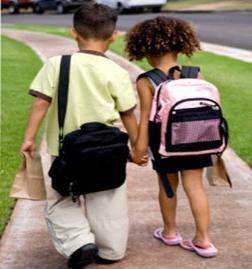
| Teaching Students with Diverse Learning Needs |




| Multicultural Education: Inspiring Equity, Inclusion, and Social Justice |
| TOM MIHAIL, PH.D. |
| . |